Tuesday, June 7, 2011

Yo guys


This is...

The last blog post...

Of 2010-2011 Period 8 Biology...

Son...

Tuesday, February 22, 2011

2.22.11

Announcements-Quiz tomorrow on Phylums, know the characteristics of each phylum and examples for each phylum.

Homework-Study for tomorrow's quiz and work on the T.V adds.
Today in class we began by learning two new animals of the day:

Animal of the day #4 Dumbo Octopus
Phylum: Mollusca

Grows up to 20 cm
Have ear-like fins at the top of their bodies

Lives in the benthic zone, living at extreme depths

Status: not considered to be endangered

Animal of the day #5 Frill-Necked Lizard
Phylum: Reptilia
a.k.a."Frilled Dragon"
1 meter in length
Large ruff of skin supported by spines of cartilage, exposed when scared
Frill might help with thermoregulation
Runs bipedally, often climbs trees to avoid predators


After we finished going over the first two animals Mr. Paek showed us a video of a lizard nicknamed the Jesus Christ Lizard because of its ability to run on water.


We then took notes on the Phylum Arthropoda before beginning our lab. The notes said that Arthropoda are jointed leg animals with four classes
1:insecta-insects
2:arachnida-spiders, tics, etc.
3:crustacea-crayfish, lobster
4:myriapoda-cenepedes, millipedes

The lab we did in class today was on pages 28 through 33 in the unit packet and it covered the Phylum Arthropoda. We split up into lab groups and each worked on the Lab while observing a spider, grasshopper, and crayfish that were dissected on the table in front of us. It was a very interesting lab.

We ended the day in our lab groups finishing the lab and for the next two days all the biology teachers are going away to a conference so we will have substitutes and remember, "BE NICE TO THE SUB".

The next scriber is Su.

Sunday, February 20, 2011

mannn

<('.'<) mannnnn.

2/18/11

Today in class, Mr Paek showed us a clip of the movie Stand by Me. When 4 kids are in the middle of the forest and they decide to go across a small lake. When they get out they discover that they are covered in leeches. Leeches are apart of the Phylum Annelida. They feed on another hosts blood. They often feed on humans blood. Without this supply of blood the leech will die.


After that Mr. Paek told everyone what the homework was and a few announcements. We are going to have a quiz on Tuesday about animal diversity. Mr. Paek said the best way to study for it is to know:

How To Study For The Quiz on Tuesday:

1. How to label a table with the 8 phylums.

2. Know 1-2 key characteristics about each phylum.

3. Memorize all 8 phylums.

4. Review the Unit 8A Notes Sheet.

Homework:

1. UP page 14, 19-27

2. Don't forget to start on the TV Ad. It is due March 1st

3. Quiz Tuesday


Right after that we finished up the lab, "Investigating Invertebrates". On UP pages 14, 19-27.

Station 1: Phylum Porifera (UP19)

This is an animation of a sponge.


Station 2: Phylum Cnidaria (UP20-21)


This is a picture of a J\ellyfish

Station 3: Phylum Platyhelminthes (UP21-22)
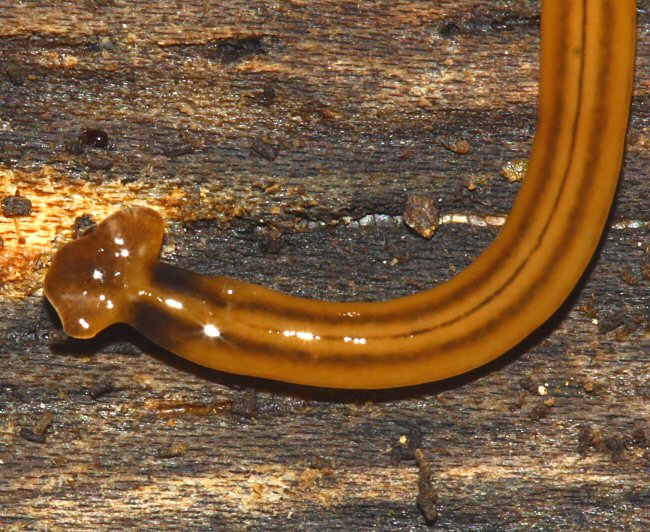

-


This is a picture of a flatworm


Station 4: Phylum Nematoda (UP22-23)


This is a picture of a Vinegar Eel


Station 5: Phylum Annelida (UP23-24)


This is a picture of an Earthworm.


Station 6: Phylum Mollusca (UP24-25)


This is a picture of an Octopus


Station 7: Phylum Echinodermata (UP26)


This is a picture of a Sea Urchin


Station 8: Phylum Arthropoda (UP27)


This is a picture of a Scoripion.

Wednesday, February 16, 2011

2/16/11
HOMEWORK:INVERTEBRATES ANIMAL PHYLUM CHART

In Bio today, we.....
1) We wrote down the animal of the day: Axolotol, and its in the Amphibia class.
2) We talked about Phylums, in the kingdom chart (no notes!). You would read the phylum chart by reading the animal name, then looking at the other animals branch off of it.
3)We worked on a green sheet about different types of invertabrates and they're types of locomotion, and unique characterists, etc. (It has to do with phylums) The pages are in chapter 26.1, but its easier to go to the apendix at the back of the book, 30-45. Thats the homework.
4)Also, with that chart, we learned about symmetry (Bilateral, radial)
5) We also took out leeches and...*shudder* cockroaches. Mr. Paek dropped a leech....twice. Also, a millipede was also taken out, but it wasnt that interesting.....

And thats it.

Tuesday, February 15, 2011

2-15-2011

Announcements-

Mr. Paek passed out grade sheets with the 2/11/11 evolution test grade. Mr. Paek took out all of the extra credit in homelogic because even if you got a D on your test, your grade will still be over 100. He wanted you to know your actual grade. But, he will put them back in your grades (homelogic) later when they will actually take effect.

Homework-

1.UP pgs 7-12 if you didn't finish in class ( DON'T DO #4 AND #5 ON PAGE 12)

2. read 26.1

Today, we took notes in the Unit 8A note sheet and filled out the section, Three Domain System, in the 2nd page.

Notes:

Three Domain System- larger, more inclusive than kingdom, recent addition to taxonomic structure. Based on comparing rRNA subunits.


1. Domain bacteria- unicellular, prokaryotic, corresponding to kingdom eubacteria

2. Domain Archaea- unicellular, prokaryotic, corresponds to kingdom archaebacteria.

3. Domain Eukaraya- consists of all organisms that have a nucleus, includes kingdoms, protista, fungi, plantae, animalia.


The animal of the day #2 is star-nosed mole. You only have to know that it is a mammal.

LAB

We did a lab today with a partner. UP pg. 7-12
Mr. Paek showed us how to do the classification key in page 5.

Classication key is like when...here are examples.

If you divided period 8's class into 2, you would separate boys against girls. Then, within the each 2 groups, you would then next separate again according to hair color and so on.

Another example is like saying "if it's this then go here" If the part,"If it's this", is true, then follow the directions on where you should go. It may be telling you a name and that will be your final answer.

UP pg. 5 (practice with Mr. Paek)

directions:

  1. look at the first picture, A.
  2. look at 1a and 1b and choose the correct fact as you look at the dog.
  3. since it is a organism with two or four functional legs, go to 2.
  4. look at 2a and 2b and choose the correct fact as you look at the dog.
  5. since it is a organism without wings, it is a Canis familiaris (FINAL STEP)
  6. you do the same thing for the other pictures.

the answers to this page are

ACFGDHEB

UP PAGES 9-12

DIRECTIONS:

The diagram tells you the characteristics of a shark so take #1 and put it in the key and find out the family each shark belongs to.

The next scriber will be Colleen

Monday, February 14, 2011

HOMEWORK: read chapter 3 in unit 18 (taking notes is recommended)

ANNOUNCEMENTS: The new unit packet is out! There also is a project due next week on Tuesday. You can find the project on page 3-4 in the unit packet.

*The Endangered Species Commercial is due in two weeks (Tuesday)

In other news, today I successfully ate some fried chicken throughout the span of class without Mr. Paek noticing (or, at least, caring enough to take away). It was a successful day.

There will be a lab on thu. and fri. featuring leeches so prepare yourself!

Animal of The Day: (a new daily thing) the animal of the day today is the Hag-fish.
type: agnatha, jawless fish
other features: the fish, when disturbed, sprays a slime which reacts with water, hardening into a jell-like substance. It's pretty cool, you can check out the Hag-fish in action at:http://www.youtube.com/watch?v=Bb2EOP3ohnE

notes: Taxonomy-def.: naming and classifying
Taxonomy groups:
-Kingdom: broadest grouping
-phylum
-class
-order
-family
-genus
-species: most specific
(those are groupings based on similarities of animals like: vertebrate vs. invertebrate, type of animal, ancestors, etc.)
"KPCOFGS" (Koo-pa-ka-fo-gus) is one way Mr. Paek remembers the order of the taxonomy groups in order of broadest to most specific.


Evolutionary relationships: based on biochemical similarities.
Binomial Nomenclature def.: 2 names comprised of genus and species.
Ex: Homo sapien (must be italicized, second word is lowercase)
Kingdoms:
-archaebacteria- comprised of prokaryotic cells
-protista- comprised of unicellular eukaryotic, heteretrophic, or autotrophic organisms.
-fungi- comprised of multicellular, eukaryotic organisms (like mushrooms and yeast)
-plantae- comprised of plants
-animalia- comprised of animals
-eubacteria- comprised of single cell organisms
And finally we ended the day with a movie about large bugs, we ended at a part where the host was trying to prove that there were very large dragon flies at one point but they died of leaving only the smaller ones. he did this by trying to prove that the large flies were not used to the sudden decrease in percentage of air in the atmosphere (thanks to developing fungi which released more carbon dioxide into the atmosphere) and therefore died of from not having enough energy to gather food and reproduce, thus, leaving the smaller dragon flies to survive (assuming, that's where he was going with his study).
And that was bio for Feb. 14th 2011 (and i apologize for any misspellings)!

Oh and before i forget, the next scriber will be Su.

Wednesday, February 9, 2011

Scribe Post 2/9/11

Announcements: The Evolution Test Is On FRIDAY!! and Tomorrow is a Bio Day in the Lyceum.


Homework: STUDY FOR THE TEST!! Finish up Lab 40 from the lab book. The Objectives on page 1 in the UP are extra credit. The TV ad project has been moved back, it is now due on Tuesday, March 1st.


Today: In class today Mr. Paek gave us some more things that we needed to study.

  • We should know UP 33-36 and how to read the graphs on those pages, along with knowing about natural selection, the time eras and the Neanderthals.

  • After this, we took a practice quiz with Mr. Paek to get an idea on how well we are prepared for the test. Then he answered any last minute questions we had. Don't worry though, it was a class quiz and it wasn't for any credit.

  • Then, we started lab 40, which involved measuring the lengths of dead grasshoppers femur bones so that we could observe variations in a species. Then we shared our class information and made a graph and finished the lab.
  • Remember to study for the test and that tomorrow is a Bio Day! Thats what we did today in class.
  • Tomorrows scriber is Will!!

Tuesday, February 8, 2011

Scribe Post 2/8/11


Announcements: Evolution test is on Friday! Thursday is a bio day.
Homework:*TV ad due Feb. 28th
*Finish evolutionary changes in primates lab (UP
42-47)
*Read 26.3 for Wednesday.
Today in Class:
-First we took notes in our notes packet under V. HUMAN EVOLUTION
Notes: *First Humans
-Ape-Human split- 5-7 million years ago.
- Australopithecus "Lucy" - 4.0 mya.
-Homo Habilis- "handy man"
-Homo Erectus first to migrate (1.8mya)
-Homo Sapiens (200,000 mya) including neanderthal man.
* Primates
-Binocular vision (3D)
-Flexible forelimbs and shoulders
-Problem solving ability
After we took notes we did another lab on pages 42-47.
-Using the pictures on page 43 and 46, answer the questions on page 45 by measuring with a protracter and a ruler. All the directions are stated on page 42. After, answer
the analysis questions on page 47.

*Next scriber will be Nick Burke*

Monday, February 7, 2011

Scribe Post 2/7/11

Announcements: Make sure you know Darwin and the natural selection, and the survival of the fittest well for the test on Friday.

Homework
:- TV ad due on 2/28
- finish lab questions on UP page 32
- answer questions 6-7 on UP page 30

Today we took notes from our To Be Or Not To Be note packet and we did a lab.

Notes:
Types of Evolution:
  1. Microevolution- changes that take place within a single species to form variations in a population (small changes)
Genetic drift- changes in a gene pool of a small population due to chance (usually reproduces genetic variability)
2. Macroevolution - changes that have taken place in a species that leads to two or more different species

Lab:
In order to do the lab we first had to know what a half-life was. A half-life is how long it takes for half of something to disappear.

In this lab we started off with 100 M&M's.
  • We first had to put the M&M's in a cup and shake the cup for a half-life, which in this case, was 10 seconds.
  • Next we had to pour theM&M's onto the plate and spread them out. The ones that showed the m were the ones that were considered to be decaying and the ones that were face down, were fine.
  • We would then remove the decay and repeat this process with the remaining M&M's and an increasing half-life time.


*Danielle will be the scriber for tomorrow*

Sunday, February 6, 2011


Scribepost Friday 2.4.11


Announcements: **Extra credit pages 24-25 in UP, bring in M&Ms (all due Monday), Objectives due Friday

Homework: UP 33-36 due Monday, 19.2 (reading only) due Tuesday


Today we took notes most of class, from our To Be Or Not To Be note packet. These are the notes we took:


  1. ANCIENT EARTH
    1. Atmospheric Condition

1.Gases

Carbon Oxide, Nitrogen, water vapor (notice no oxygen)


2. Miller-Urey Experiment- Synthesized complex organic molecules by mixing and electrically stimulating a mixture of gases


  1. The first cells-

4.6 bya- Earth was born

4.0 bya- Earth began to cool

3.5 bya- bacteria

1.3 bya- multicellular organism


  1. Age of Earth

a.Formation of Earth

4.5 billion years ago

b. Relative Dating (UP23)

geologic time scale/ deeper layers are older than surface layers


(skip to IV.)


  1. TYPES OF MACROEVOLUTION

1.Gradualism

one species gradually changes into a new species

2. Divergent Evolution or Speciation

a. Definition- development of 2 or more species from a common ancestor

Adaptive Radiation- a habitat opens up that permits many new niches to be occupied allowing many variations to survive

b. Process that needs to occur:

Graphic Isolation- members of species separated


Reproductive Isolation- species that are separated by ability to reproduce


3. Punctuated Equilibrium- Tempo of speciation: gradual vs. divergence in rapid bursts; helped explain the non-gradual appearance of species


Convergent Evolution-

a. definition- when 2 separate species develop similar adaptations through different evolutionary trees


b.examples- sharks and dolphins (mimicry)


After taking notes, Mr. Paek let us start our homework.


***Next poster will be Star.***


Thursday, January 27, 2011

Scribe Post for January 27th, 2011

Date- January 27th, 2011


Announcements- Tommorrow, Friday, January 28th, 2011, we have a bio day that is located in the auditorium. Go straight to the auditorium during period 8.


In Class- We did a lab in class on natuaral selection. It can be found on pages 17-19 in your green unit packet. The procedure for this lab went as follows:

  • You would spread a piece of fabric out on the table.
  • Grab 10 different colors of paper, and hole punch each color 10 times and put them on the cloth, so you have a total of 100.
  • 2 members of the group would act as "predators," which means that they would pick 40 pieces of paper each, but turning away after each pick and picking the 1st color that they saw with no hesitation.
  • Collect the 20 remaining pieces on the cloth and record the number of each color remaining on the data table on page 18.
  • Add 4 chips of the same color for every chip that remains from the original population, now the total should be 100 again.
  • Repeat the picking procedure for the second and third generations and record your data in the same place.

Purpose- The most important thing when doing these labs is to understand why they are being done. The purpose of this lab is to learn how natural selection works. And to also reinforce your concept of to how natural selection works with a demonstration.

NATURAL SELECTION: The process by which organisms with variations most suited to their local environment survive and leave more offspring. It occurs in any situation when more individuals are born than can survive, there is heritable variation, and variable fitness among individuals.

(Those terms and definitions can be forund in your textbook, Ch. 16, section 3.)

NEXT SCRIBER: Sammie

Scribepost 1/27/11

Date...1.27.11


Announcments...nothing interesting that anybody needs to know about.


Homework...read 16.2 and 16.3 and take notes on 16.3, also finish the lab about bird beaks we started in class and do the graph


In class...we began the lab on page 4 of the unipacket. the lab was about the evolution of bird's beaks for whatever food source they have. We were split into our new lab groups and we began the experiments with the 4 different types of "beaks," forceps, a large spoon, a staple remover, and pliers were supposed to represent beaks. In the lab there were 5 different experiments, one where we had to remove styrofoam peices from a tub, one were we had to pick out single grains of rice from a log, one were we had to remove staples from a paper rabbit, one were we had to pick rubberband out of a box with a lot of shredded paper init, and one were we had to not only pick up sunflower seeds but also crack them with our "beak."


The next scriber will be...Jake J

Tuesday, January 25, 2011

Scribepost Jan. 25 2011

Announcements: All homework assignments and unit calendars will be posted on moodle.


Homework:  Read chapter 16.2 (no notes required) and chapter 16.3 notes.  Both will be checked in on thursday.


What we did in class:  Today in class we took notes from Mr. Paek's lecture about Darwin vs. Lamark. Also we got the unit packet for the new unit(Evolution 101) which took up most of class.  Then we ended class with watching more of the Charles Darwin movie for the last 10 minutes of class.  


Lamark:  Had three main theories on evolution.
  1. The Desire to Change-  animals and organisms change in structure because of a desire to improve.  An example is that a giraffe's neck got longer because they stretched to get leave at the top of branches.
  2. Use and Disuse-  use it or lose it.  If decided not to use then something would be lost over time.  Mr. Paek described this by saying if he didn't like his thumb and decide to wrap it up and not use it for the rest of his life, it would lose muscle.  Now becoming factor of his offspring.
  3. Acquired characteristics were inherited-  Any changes in the adult were passed on to the offspring.  Example is the stretched giraffe necks were now inherited by the young.
While talking discussing this Mr. Paek said based on Lamark's theories, if he wanted his son to be really strong he could start working out really often so he becomes really strong.  Then have a child that way his son has a better chance of being strong.  Then he thought of this video and showed it to us.  

http://www.youtube.com/watch?v=T-CMrswt_1A

Darwin:  Came up with five theories of evolution of his own too.

  1. Overproduction of Offspring-  Organisms tend to produce more offspring then needed to replace numbers.
  2. Struggle for Existence-  Competition for resources and predation are always present. The example used in class was that Mr. Paek would tell us only 1 person would get an A second semester and the rest would get either a C or F.  So, then we would all be more competitive to get that one spot for the A.
  3. Variations in Populations exist-  Differences in structure exist at birth not acquired.  These variations are inherited from the parents.
  4. Fitness-  Organism must have a physical trait or behavior so they can survive and reproduce. 
  5. Common Descent-  Some species share a common ancestor.
Natural Selection:  The organism that are best suited for the present environment conditions will survive to produce therefore passing on their characteristics to their offspring. (Survival of the fittest)

  • Conditions that help-  Mutations are a source of variation in genes. Also, gene flow when genes are moving between populations.
  • Adaptations-  Traits that survive from one generation to the next.
That was it for today, the next scriber will be Donnie.


Wednesday, December 8, 2010

Scribe Post 12/8/10

Announcements: Extra Credit 64 Punnett square due Monday; Quiz on Monday


Homework: Thursday: UP pages 51-52

Friday: Lab 35

Monday: UP pages 53-56


What We Did In Class: We talked about the different syndromes that can be caused with extra chromosomes and we went over UP pages 51-52.


Syndromes:


Edwards Syndrome: an extra part to the 18th chromosome. It has many physical and mental defects that it can lead to and early death.


Patau Syndrome: an extra part to the 13th chromosome. It has the same defects as Edwards Syndrome, only more severe, that it can lead to death soon after a baby is born.


Turner's Syndrome: a person that is missing a 2nd sex chromosome (ex. XX, XY now becomes X, X). It has minor conditions, but they cannot produce offspring.


Down Syndrome: this person has 47 chromosomes instead of 46. About half of the people born with Down Syndrome have heart problems at birth, so some can lead to early death.


Klinefelter's Syndrome: this person has an extra sex chromosome (ex. XXX, XXY). They are usually male. They have a low level of testosterone and usually have female-like features, since they also have 2 X chromosomes.


UP pages 51-52:


We talked about how children can obtain diseases from their parents in their genes. For the Sickle Cell Disease we found out that the alleles were codominant, which basically means dominant. For the Cystic Fibrosis, we found out that it's caused by a recessive allele in the 7th chromosome. For PKU and Tay-Sachs Disease, we found out that they both are autosomal recessive, so if they had children with people without the syndrome, then their children will most likely not have it either. However, for Huntington's disease, is autosomal dominant, so even if they had children with people that don't have the disease, they will still most likely get the disease, too. For Achondroplasia, it is also dominant, so their kids would most likely have the trait.

Well, that's all we did today, I hope everyone enjoyed it and got as much as they expected out of me.

The next scriber is Drake. Good Luck!!!

Tuesday, December 7, 2010

Scribe Post 12.7.2010

12.7.2010

Announcements: Quiz Wednesday or Thursday.

Homework: Finish Lab 35 (Due Friday) & 49-50 if not yet done.

Today’s period consisted of going over the homework Mr. Paek had assigned yesterday (12.6.2010) and starting Lab 35 in class.

• For example, one problem that we went over was (pg. 48 practice)...


Question: What is the probable genotype of individual D?

Solution: Since we know D’s parents are Hh x hh we can now make a Punnett square.


To determine which one genotype is correct, we must look at D’s offspring. Individual D’s husband has a genotype of hh. One of their children, K, has Hh. The Punnett squares below show two possible crosses for C x D given that D is either Hh or hh.


Therefore, since it is not possible to have an offspring who is Hh (K), the genotype for D must be Hh.

Also, we went over what we had learned so far such as the single traits, dihybrid, codominant, blood type, and sex linked genes. (Briefly explained below)


Single trait- a trait controlled by a single gene that has two alleles.


Dihybrid- mating between two individuals, both of whom are heterozygous for the two genes being followed. i.e: AaBb x AaBb


Codominant- Describes two or more alleles that are equally dominant.
i.e: WR- WR= White + Red


Blood Type- Contains three different alleles, two copies of which exist in all human body cells.


Sex Linked Genes- concerning characteristics that are determined by genes carried on the sex chromosomes. (X & Y)


This concludes our Bio day :)


Next Scriber- Lauren

Monday 12.6.10

Announcements: None

Homework: UP pages 46-50

Today in class we learned about X-Linkage (Sex Linkage) Problems. An X-linked trait is one whose gene is carried only on the X chromosome. Females have two X chromosomes (XX) and males have one (XY). There is no corresponding gene on the X chromosome, so one recessive trait could show up in a male. Examples are colorblindness, hemophilia, and Duchenne muscular dystrophy. Women who don't have the disease but have one recessive allele are called carriers.

Affected female has children with a normal male.

Steps 1&2: The first thing you do is assign letters and determine the genotypes of the parents. XM-normal, Xm=affected, and Y=male chromosome with no affected ellele.
            XMXm-carrier female, XMY-normal male

Step 3: Determine gamete genotypes prodeuced by each parent:
            XMXm= XM, Xm           XMY= XM, y     
For all X-linked punnett squares, always start with a normal punnett square and XY (male) on one side and XX (female) on the other:


Step 4: Set up the punnett square with XM and Y on one side, and Xm and XM on the other

Step 5: Combine parental gametes:


Genotype: XMY*XMXm
Phenotype: 1 normal female (XMXM), 1 normal male (XMY), 1 carrier female (XmXM), and 1 affected male (XmY).

Autosomal: any chromosome other than a sex chromosome.


We also learned about Pedigrees.
SYMBOLS:
Squares=male
Circles=female
Black square/circle=affected (recessive) individual
Half black/half white=carrier
Pedigree Analysis

Here is an example:

Pedigrees can be x-linked or not x-linked. In the pedigree above, the black circles/sqaures represent colorblindnes, it is recessive. Colorblindness is x-linked. For the pair in the first generation, the male is colorblind (XcY) and the female is not. She is not a carrier, so she must be XCXC. Their sons are not colorblind, so they are both XCY. The daughter in the second generation is a carrier, so her genotype is XcXC. Her husband is a normal male (XCY), and so is one of her sons. The other son got the recessive gene so he is colorblind (XcY).

Here is a pedigree for a trait that is not x-linked:


     This is a pedigree for attached earlobes (aa). For the first generation pair on the left, the male has attached earlobes (aa) and the female does not. The female must have the recessive gene (Aa) because one of her children has attached earlobes. The one that has free hanging earlobes also must have the recessive gene (Aa) because it has a kid with attached earlobes.
     The first generation couple on the right both have the genotypes Aa. This is because 3 out of their 4 kids have attached earlobes. The one that has free-hanging earlobes has Aa, because it has a kid with attached earlobes.


Next scriber-Gabriela

Sunday, December 5, 2010

Friday 12/03/10

Anouncements: Be ready for a Pop Quiz. Next week for Extra Credit Mr.Paek will give a trihybrid cross. (64 squares)

Homework: UP 40, 41, 44

What we did in class...
We did UP pg. 39 and pg. 43. We learned how to do Incomplete Dominance, Codominance, and Multiple Alleles.

Incomplete Dominance:
*Sample Problem: Cross a red flower with a pink flower.
  • Assign letters (R- red W- white RW- pink)
  • Determine the parental genotypes. (RR x RW)
  • Set up a Punnet Square using the gamete genotypes.


  • Combine the gamete genotypes of one parent with those of the other parent to show all possible offspring genotypes.


  • Determine the phenotypes of the offspring and state the genotypic and phenotypic ratios.
    --- Genotype: 2 RR, 2 RW
    --- Phenotype: 2 Red, 2 Pink

Multiple Alleles:


*Sample Problem: Cross a homozygous for type B blood with a heterozygous for type A blood.
  • Assign letters and determine the genotypes of the parents (IBIB x IAi)
  • Determine the gamete genotypes produced by each parent (IBIB= IB, IB/IAi= IA, i)
  • Set up Punnett square using the gamete genotypes


          • Combine parental gametes


          • Determine the phenotypic and genotypic ratios of the offspring and answer the question. --- Genotype: 2 IAIB, 2 IBi
            --- Phenotype: 2 type AB blood, 2 type B (hybrid) blood

          Thursday, December 2, 2010

          Joels Scribe for 12/2/2010

          Hey everyone, here's what we did today.

          HOMEWORK!
          35+37-38

          Announcements:none

          Class Time:
          In class we did not do much, we talked about Dihydrid problems and then Mr.Paek gave us time to work on the unit packets.
          -We were talking about crossing over, that's when two chromosomes pair up, get very close and exchange parts of each. There are 5 different kinds, we learned the second kind.


          -When you try to find out the hair color or height, more then one set then you use Dihydrid. Most commonly, when you have two traits.


          How to Solve Dihydrid problems


          (1) Find the Genotypes and Phenotypes


          Ex:Tall=T, Short=t


          (2)Determine the parent genotypes


          Ex:TTtt or RRrr


          (3) Use the F O I L method like Mr. Paek showed us


          FOIL=First,Outer, Inner,Last


          (4)Put in on a Chart Like this....


          (5)Then find out the Genotype and Phenotype Ratio

          That's it!

          Tomorrows Scribe will be by....Zack(if he did it, then Alex)
          I hope i was helpful, goodnight to all!

          Wednesday, December 1, 2010

          JAKE NELSON, 12/1/10

          Announcements: none
          Homework: finish pages 23-28 if you did not finish them in class

          Mr.Paek briefly went over meiosis with us for a couple minutes and showed us a slide of the stages within meiosis.
          Meiosis 1
          Prophase 1- KNOW THIS IS THE STAGE WHERE CROSS OVER HAPPENS
          Crossing over is when pieces of homologous chromosomes cross over and switch place, this results in variety of the offspring.
          Metaphase 1
          Anaphase 1

          Telephase 1

          Meiosis 2
          Prophase 2
          Metaphase 2
          Anaphase 2
          Telephase 2


          Then Mr.Paek told us to do the lab on pages 23-28, which had to do with genotypes and traits. Heads means that it is a dominant trait (A). Tails means that it is a recessive, buy the only way it can be a recessive trait is if both the coins land on tails. That was our day in biology class.